Breaking the 'Clean Eating' Myth: How to double your food volume tonight

The Lie You Were Sold at the Grocery Stor
Here's the truth: clean eating as most people practice it is a volume trap. You shrink your portions, you feel deprived, and by 9 PM you're raiding the pantry like it owes you money.
The myth isn't that whole foods are bad. The myth is that eating well means eating less.
It doesn't. Not even close.
Calorie Density Is the Only Number That Matters
Every food carries a caloric load per gram. That number - calorie density - is the single lever that determines whether your plate looks like a punishment or a feast.
High performers who understand this don't count bites. They engineer volume. They build meals that are physically large, visually satisfying, and metabolically efficient all at once.
Here's what that looks like in practice. The foods that give you the most volume per calorie:
- Leafy greens - spinach, arugula, romaine - run roughly 5 to 10 calories per cup. You can eat a pound of this for under 100 calories.
- Cucumbers and zucchini clock in around 15 to 20 calories per cup. They add serious bulk and water content.
- Shirataki noodles are nearly calorie-free and replace pasta volume for a fraction of the load.
- Egg whites deliver 17 calories per egg white with 4 grams of protein - pure structural efficiency.
- Frozen cauliflower rice replaces regular rice at roughly one-quarter the calorie cost per cup.
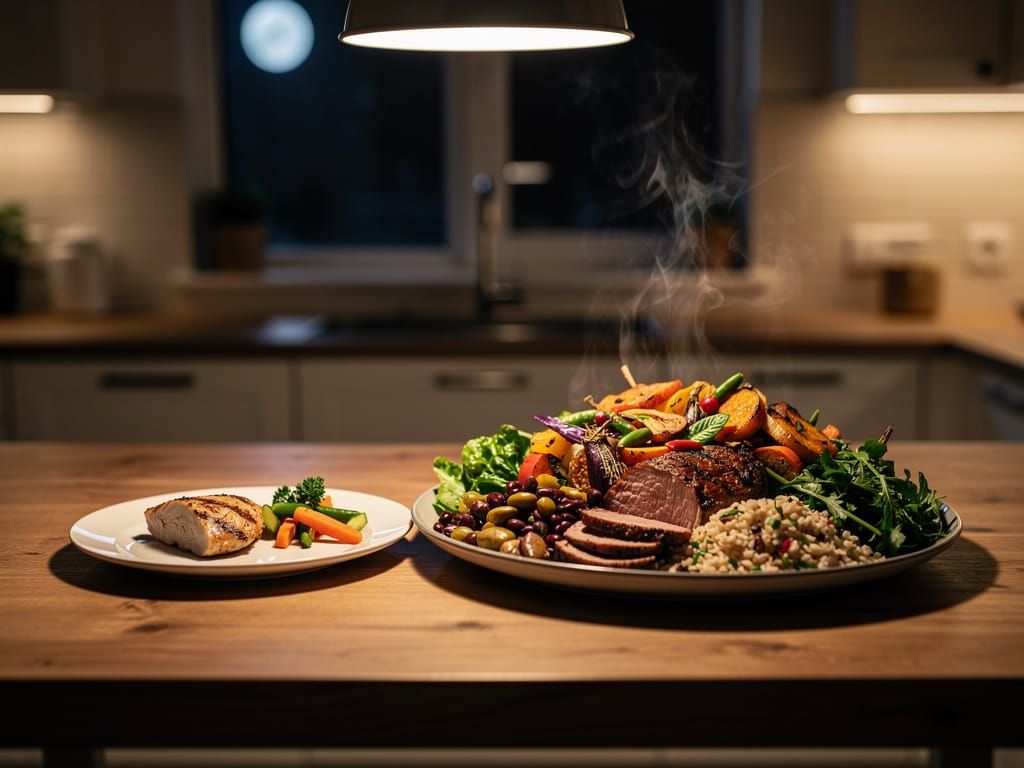
Swap one of these into tonight's dinner and your plate doubles in size. Swap two and you're eating a volume that most people would call excessive - while staying completely on target.
The Preparation Hack Nobody Talks About
Raw volume is one thing. Cooked volume is another game entirely.
When you roast vegetables at high heat, they shrink. When you eat them raw or lightly steamed, they hold their structure and fill your stomach faster. The mechanical act of chewing bulky, water-rich food sends satiety signals long before your calorie count climbs.
This is why a raw salad with shredded cabbage, sliced cucumber, and a cup of cherry tomatoes hits differently than the same calories in a handful of crackers. The crackers disappear in 30 seconds. The salad takes ten minutes to eat and leaves you genuinely full.
That's not a trick. That's physics working in your favor.
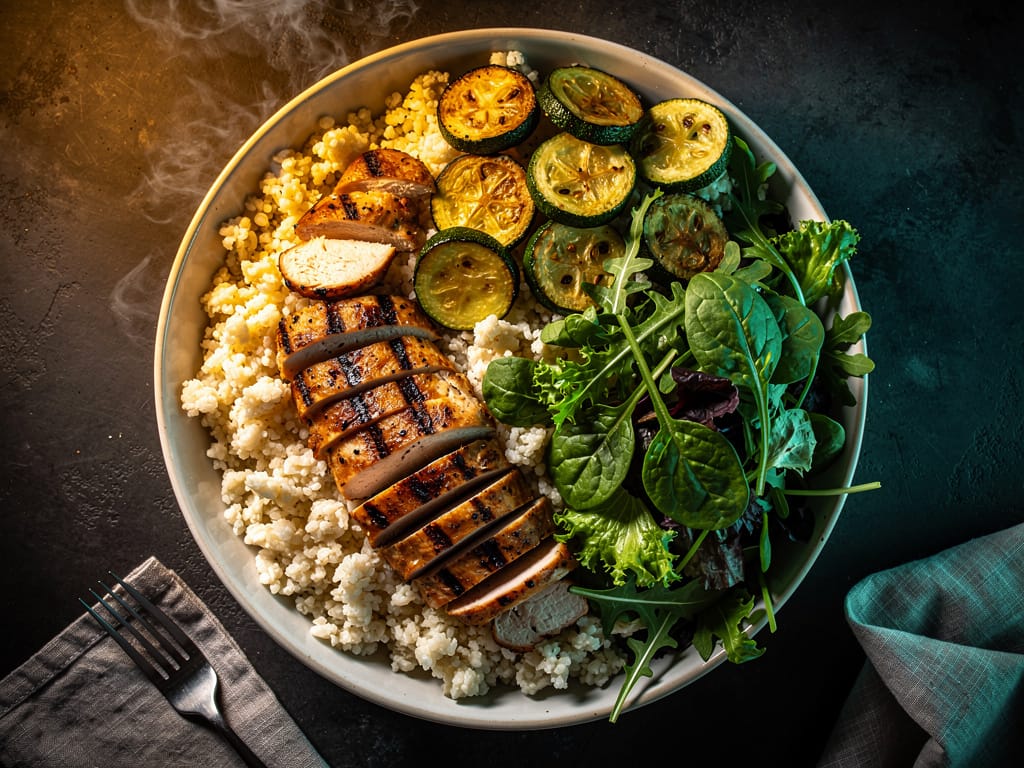
Your Tonight Blueprint
You don't need a new meal plan. You need a volume audit on what you're already eating.
Take your current dinner. Ask one question: what is the densest item on this plate? Nine times out of ten it's the starch - the rice, the pasta, the bread. That's your swap target.
Replace half the rice with cauliflower rice. Replace half the pasta with zucchini noodles or shirataki. Add a base of raw greens under whatever protein you're already cooking. Bulk up the sauce with diced tomatoes or roasted peppers instead of oil.
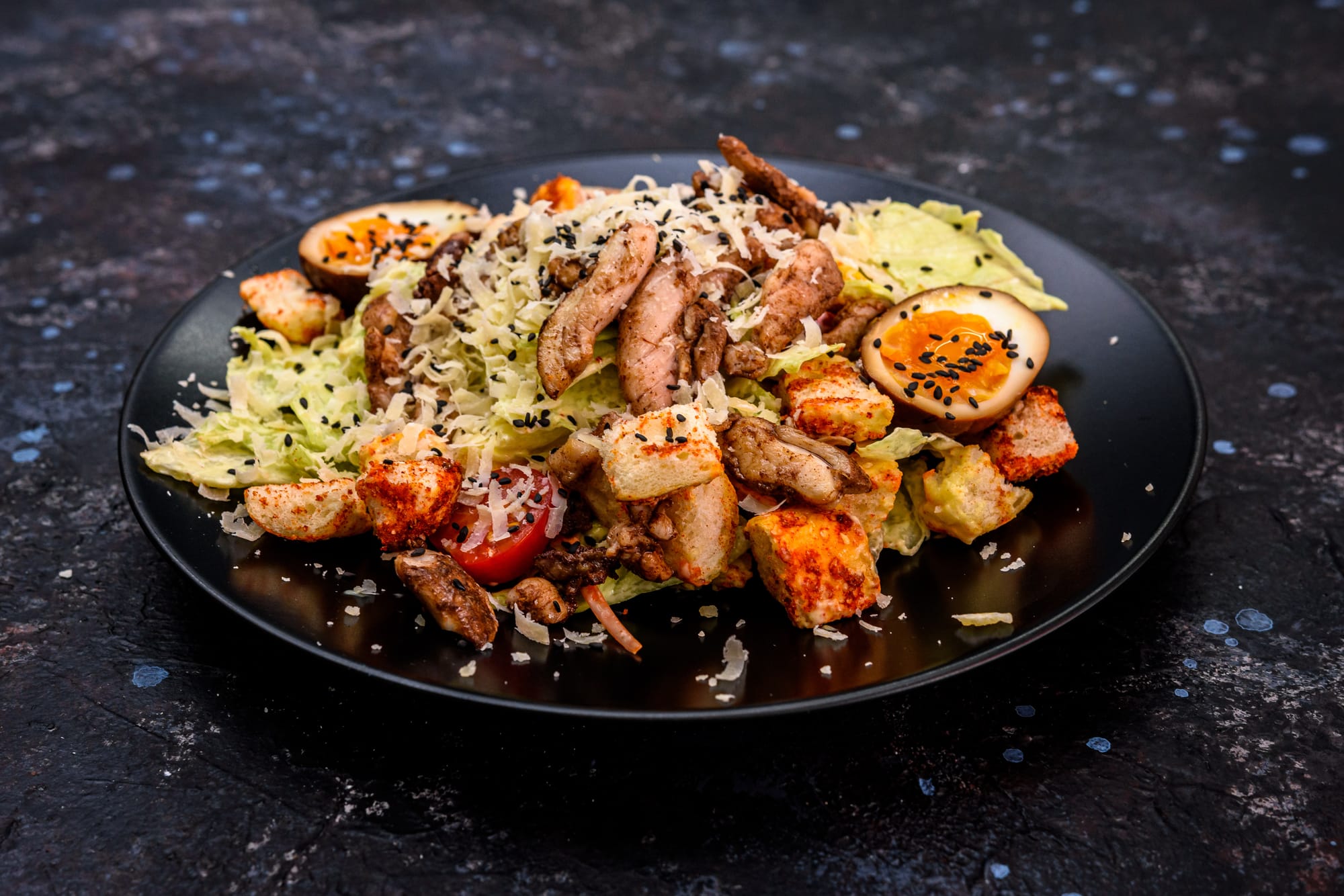
Your calorie count stays flat. Your plate doubles. Your satiety goes through the roof.
This is the system that separates people who feel restricted from people who feel like they're eating more than they should - while quietly running a caloric deficit that actually holds.
The goal was never to eat less. The goal was always to eat smarter. And smarter, it turns out, looks a lot like more.
Start tonight. One swap. One bigger plate. One moment where you realize the old rules were never built for people who actually want to perform at their best.
The volume is waiting for you.